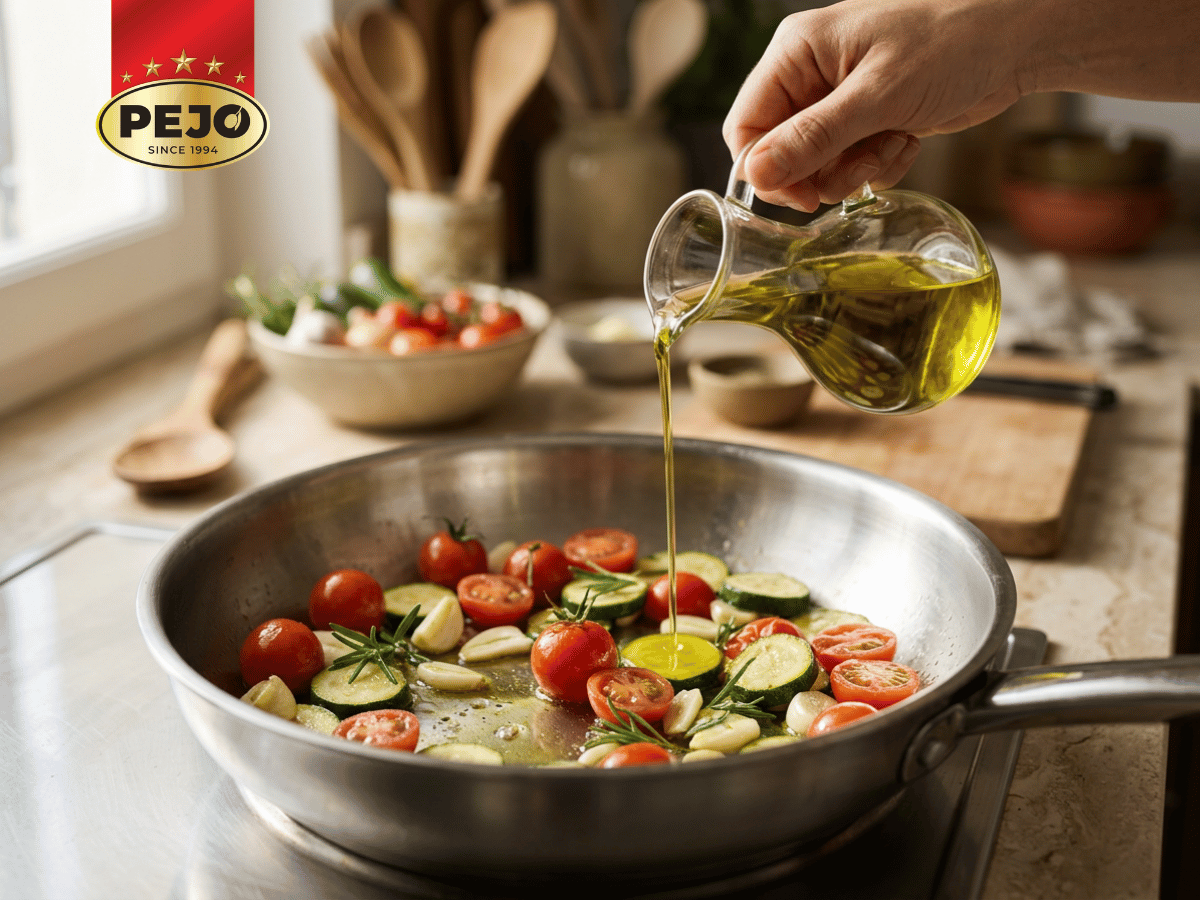
Extra virgin olive oil is widely appreciated for its natural flavor, nutritional characteristics, and importance in Mediterranean cuisine. However, one question continues to cause confusion among home cooks: can you cook with extra virgin olive oil?
The answer is yes. Extra virgin olive oil is suitable for many everyday cooking methods, including sautéing, pan-frying, roasting, baking, and controlled deep-frying.
Its high proportion of monounsaturated fatty acids and naturally occurring antioxidant compounds contribute to its stability when heated. Despite the common belief that extra virgin olive oil should only be used in salads and cold dishes, scientific research supports its use in a wide range of cooking applications.
The key is understanding cooking temperatures, oil quality, and how different preparation methods affect its characteristics.
In this guide, we explain how to cook with extra virgin olive oil, when to use other olive oil categories, and which mistakes to avoid in the kitchen.
Is Extra Virgin Olive Oil Suitable for Cooking?
Extra virgin olive oil, commonly abbreviated as EVOO, is obtained directly from olives through mechanical or other permitted physical extraction methods without chemical refining.
Its composition makes it a versatile ingredient for both cold preparations and cooked dishes.
Several characteristics contribute to its cooking performance:
- A high proportion of monounsaturated fatty acids, particularly oleic acid.
- Naturally occurring phenolic compounds.
- Vitamin E and other minor components.
- Relatively good resistance to oxidation under appropriate cooking conditions.
A 2022 scientific review published in Trends in Food Science & Technology examined the behavior of extra virgin olive oil during cooking and highlighted how its fatty acid composition and antioxidant compounds contribute to its thermal stability.
This does not mean that extra virgin olive oil remains unchanged when heated. Like all edible oils, it gradually undergoes chemical changes when exposed to heat, oxygen, and prolonged cooking.
Nevertheless, fresh, good-quality extra virgin olive oil is a suitable choice for most everyday cooking applications.
Understanding Extra Virgin Olive Oil Smoke Point
The smoke point is one of the most commonly discussed characteristics when choosing a cooking oil.
It refers to the temperature at which an oil begins to produce visible smoke under specific conditions.
Once an oil starts smoking, its quality may deteriorate more rapidly, unpleasant flavors can develop, and unwanted degradation products may form.
What Is the Smoke Point of Extra Virgin Olive Oil?
Extra virgin olive oil does not have one universal smoke point.
Depending on its composition, freshness, free fatty acidity, and storage conditions, published smoke-point estimates commonly fall within approximately 175–210°C (347–410°F).
The actual value varies between individual oils and testing methods.
The International Olive Council describes olive oil as suitable for frying and identifies approximately 180°C as a recommended frying temperature.
For home cooking, the practical objective is to control the temperature and avoid heating oil until it visibly smokes.
Why Smoke Point Is Not the Only Factor
A common misconception is that the cooking oil with the highest smoke point is automatically the best option.
However, smoke point alone does not fully explain how an oil behaves when heated.
Other important factors include fatty acid composition, antioxidant content, cooking duration, oxygen exposure, and the oil’s initial quality.
An oil can begin undergoing oxidation before reaching its smoke point. Conversely, a higher smoke point does not necessarily indicate greater resistance to oxidation throughout prolonged cooking.
This is why oxidative stability is also an important consideration when selecting olive oil for everyday cooking.
Oxidative Stability: Why Olive Oil Performs Well When Heated
Oxidative stability describes an oil’s ability to resist chemical deterioration caused by exposure to oxygen.
Heat can accelerate these reactions, particularly during extended cooking or repeated frying.
Extra virgin olive oil has characteristics that can contribute to its resistance to oxidation.
Monounsaturated Fatty Acids
Olive oil contains a high proportion of oleic acid, a monounsaturated fatty acid.
Compared with many polyunsaturated fatty acids, oleic acid is generally less susceptible to oxidation.
This characteristic contributes to olive oil’s performance during cooking.
Naturally Occurring Antioxidants
Extra virgin olive oil contains phenolic compounds and other naturally occurring antioxidants.
These substances can contribute to protecting the oil against oxidative deterioration, although their concentrations gradually change during heating.
A study examining domestic cooking with extra virgin olive oil demonstrated that cooking temperature and duration influence its phenolic composition.
This explains why moderate temperatures and shorter cooking times can help preserve more of the oil’s original characteristics.
Best Ways to Cook with Extra Virgin Olive Oil
Extra virgin olive oil can be used across a variety of cooking methods.
The following table provides a practical overview.
| Cooking method | Typical cooking temperature | Is EVOO suitable? |
|---|---|---|
| Sautéing | 120–160°C | Yes |
| Pan-frying | 150–180°C | Yes |
| Roasting vegetables | 180–200°C oven setting | Yes |
| Baking | 160–190°C oven setting | Yes |
| Deep-frying | 160–180°C oil temperature | Yes, with temperature control |
| Slow cooking | Generally below 120°C | Yes |
| Extreme high-heat searing | Variable, potentially above 220°C | Another suitable cooking oil may be preferable |
These temperatures are approximate. An oven’s temperature setting does not necessarily represent the actual temperature reached by the oil or food.
Can You Sauté with Extra Virgin Olive Oil?
Sautéing is one of the most practical ways to use extra virgin olive oil in everyday cooking.
It typically involves cooking ingredients in a relatively small amount of oil over moderate heat.
Extra virgin olive oil works particularly well with vegetables, onions, garlic, mushrooms, seafood, and Mediterranean-style dishes.
Its natural aroma can enhance the flavor of ingredients without requiring additional sauces or seasonings.
For the best results, heat the oil gently, add the ingredients before the oil begins smoking, and adjust the temperature throughout cooking.
A flavorful extra virgin olive oil can also be added shortly before serving to restore some of the fresh olive character that may diminish during heating.
Can You Fry with Extra Virgin Olive Oil?
Yes, extra virgin olive oil can be used for pan-frying when the cooking temperature is properly controlled.
Pan-frying typically requires less oil than deep-frying and is suitable for preparing fish, eggs, chicken, vegetables, and other everyday foods.
Extra virgin olive oil contributes flavor while providing a cooking medium with relatively good oxidative stability.
When pan-frying:
- Use medium or medium-high heat as appropriate.
- Avoid leaving an empty, oiled pan over high heat.
- Remove excess surface moisture from ingredients.
- Reduce the temperature if the oil starts smoking.
- Avoid prolonged heating after cooking is complete.
For dishes where olive oil flavor is desirable, extra virgin olive oil is an excellent option.
Discover our Angels Extra Virgin Olive Oil for Mediterranean cooking, dressings, and everyday food preparation.
Using Extra Virgin Olive Oil for Roasting
Roasting with extra virgin olive oil is a traditional Mediterranean cooking practice.
Olive oil helps distribute heat across the surface of ingredients while contributing to flavor and texture.
It works particularly well with potatoes, peppers, aubergines, courgettes, tomatoes, carrots, and other vegetables.
Extra virgin olive oil can also be used when preparing roasted chicken, fish, and Mediterranean-style tray bakes.
How to Roast with Olive Oil
For many vegetable recipes, an oven temperature between 180°C and 200°C is appropriate.
Coat the ingredients lightly and evenly with olive oil rather than allowing excessive quantities to accumulate in the roasting tray.
Monitor the food throughout cooking and avoid excessive browning or smoking.
For additional flavor, finish the roasted dish with a small amount of fresh extra virgin olive oil before serving.
Can You Bake with Olive Oil?
Extra virgin olive oil is also suitable for baking, especially in recipes where its natural flavor complements the other ingredients.
It can be used in:
- Focaccia and Mediterranean breads.
- Savory pastries.
- Olive oil cakes.
- Muffins and selected biscuits.
- Homemade pizza dough.
When baking sweet recipes, a milder olive oil may be preferable to a particularly bitter or pungent extra virgin oil.
Olive oil can replace butter in some recipes, although the quantity may need to be adjusted because butter and olive oil have different fat and water compositions.
For recipes requiring butter to be creamed with sugar or used in laminated pastry, a direct substitution may not produce the same texture.
Is Extra Virgin Olive Oil Good for Deep-Frying?
Extra virgin olive oil can be used for deep-frying, provided that the temperature and cooking duration are carefully managed.
Deep-frying generally requires considerably more oil than sautéing or pan-frying, making cost and flavor important practical considerations.
A scientific study comparing olive oil stability under deep-frying conditions found that the extra virgin olive oil tested demonstrated good resistance to degradation under the study’s conditions.
However, frying performance varies between oils and depends on temperature, food composition, exposure to oxygen, and heating duration.
Recommended Deep-Frying Practices
For controlled frying with extra virgin olive oil, temperatures around 160–180°C are generally practical, provided the oil remains below its individual smoke point.
A cooking thermometer can help maintain a consistent temperature.
Avoid overheating the oil, overcrowding the fryer, and introducing excessively wet ingredients.
Never leave hot cooking oil unattended or use water to extinguish an oil fire.
Oil should also be discarded when it develops persistent foaming, unusual odors, excessive darkening, or other noticeable signs of deterioration.
Is Extra Virgin Olive Oil the Most Economical Option?
Although extra virgin olive oil can perform well during frying, it may not be the most practical choice for businesses or households that frequently prepare large quantities of fried food.
Its premium price and distinctive flavor make other olive oil categories worth considering.
Food-grade olive pomace oil, for example, is commonly selected for frying because of its relatively mild flavor and economical positioning.
When Should You Use Virgin or Olive Pomace Oil Instead?
Different olive oil categories offer different characteristics and culinary advantages.
Choosing the right oil depends on the preparation method, desired flavor, budget, and quantity required.
Virgin Olive Oil for Everyday Cooking
Like extra virgin olive oil, virgin olive oil is obtained directly from olives using permitted mechanical or physical methods without chemical refining.
However, it is classified according to different chemical and sensory requirements.
Virgin olive oil can be a practical choice for everyday cooking, including sauces, vegetable dishes, marinades, and roasting.
Explore our Himara Virgin Olive Oil for versatile everyday food preparation.
Olive Pomace Oil for Frying
Olive pomace oil is produced from the residual material remaining after the primary extraction of olive oil. The recovered oil undergoes refining and is blended with edible virgin olive oils to create the commercial food-grade product.
Its generally mild flavor makes it suitable for applications where an intense olive oil taste is not desired.
It can be particularly practical for frequent frying and larger-volume cooking.
Discover Kanina Olive Pomace Oil for your cooking and food preparation requirements.
Blended Oils for Versatile Food Preparation
Blended oil products may be developed to provide specific flavor, price, and culinary characteristics.
Their suitability for cooking depends on their actual composition and product specifications.
Always check the ingredient declaration and any preparation guidance provided on the label.
Explore our Angels Blended Olive Oil products for additional everyday cooking options.
For a detailed comparison of these categories, read our guide to the differences between extra virgin, virgin, and pomace olive oil.
Common Mistakes When Cooking with Olive Oil
Even a good-quality cooking oil can lose desirable characteristics when handled incorrectly.
Overheating the Oil
Avoid heating olive oil until it produces visible smoke. Use controlled temperatures appropriate to the cooking method.
Using the Same Oil Repeatedly
Repeated heating and cooling can accelerate deterioration. Avoid repeatedly reusing frying oil, particularly when its appearance, smell, or performance changes.
Storing Olive Oil Beside the Stove
Heat, light, and oxygen contribute to quality deterioration. Store olive oil in a tightly closed container, away from direct sunlight and heat sources.
Choosing Oil Based Only on Color
Green or golden color does not establish an olive oil’s quality grade, freshness, or suitability for cooking.
Assuming All Olive Oils Are Identical
Extra virgin, virgin, refined olive oil products, and olive pomace oil have different production methods and characteristics. Choose according to the product’s specifications and intended application.
Frequently Asked Questions
Is it safe to cook with extra virgin olive oil?
Yes. Fresh, food-grade extra virgin olive oil is suitable for everyday cooking when used at appropriate temperatures and without excessive overheating.
Does extra virgin olive oil become unhealthy when heated?
Heating causes chemical changes in all cooking oils, but normal cooking does not automatically make extra virgin olive oil unhealthy. Its composition provides relatively good oxidative stability, although prolonged or excessive heating can accelerate degradation.
Can you cook with extra virgin olive oil at 200°C?
Extra virgin olive oil can be used in many recipes with an oven setting of 200°C. However, avoid heating the oil itself beyond its individual smoke point.
Does cooking destroy the benefits of extra virgin olive oil?
Cooking can reduce some naturally occurring phenolic compounds and other heat-sensitive components. Nevertheless, the oil retains its characteristic fatty acid composition, and some beneficial compounds can remain after cooking.
Which olive oil is best for everyday cooking?
Extra virgin olive oil is a versatile choice for most everyday cooking applications. Virgin olive oil and food-grade olive pomace oil may also be practical alternatives depending on flavor preferences, cooking methods, and budget.
Final Thoughts: Make Olive Oil Part of Your Everyday Cooking
Extra virgin olive oil is much more than a salad dressing or finishing ingredient.
Its natural flavor, fatty acid composition, and cooking versatility make it suitable for a wide range of Mediterranean and everyday recipes.
Whether you are sautéing vegetables, roasting potatoes, preparing homemade bread, or pan-frying fish, extra virgin olive oil can be an excellent choice when used correctly.
For frequent frying or larger-volume food preparation, virgin olive oil, olive pomace oil, and appropriate blended oil products offer additional practical alternatives.
At PEJO, our portfolio includes different olive oil categories developed to meet a variety of consumer and culinary requirements.
Explore PEJO’s olive oil collection and discover the right oil for your kitchen.