
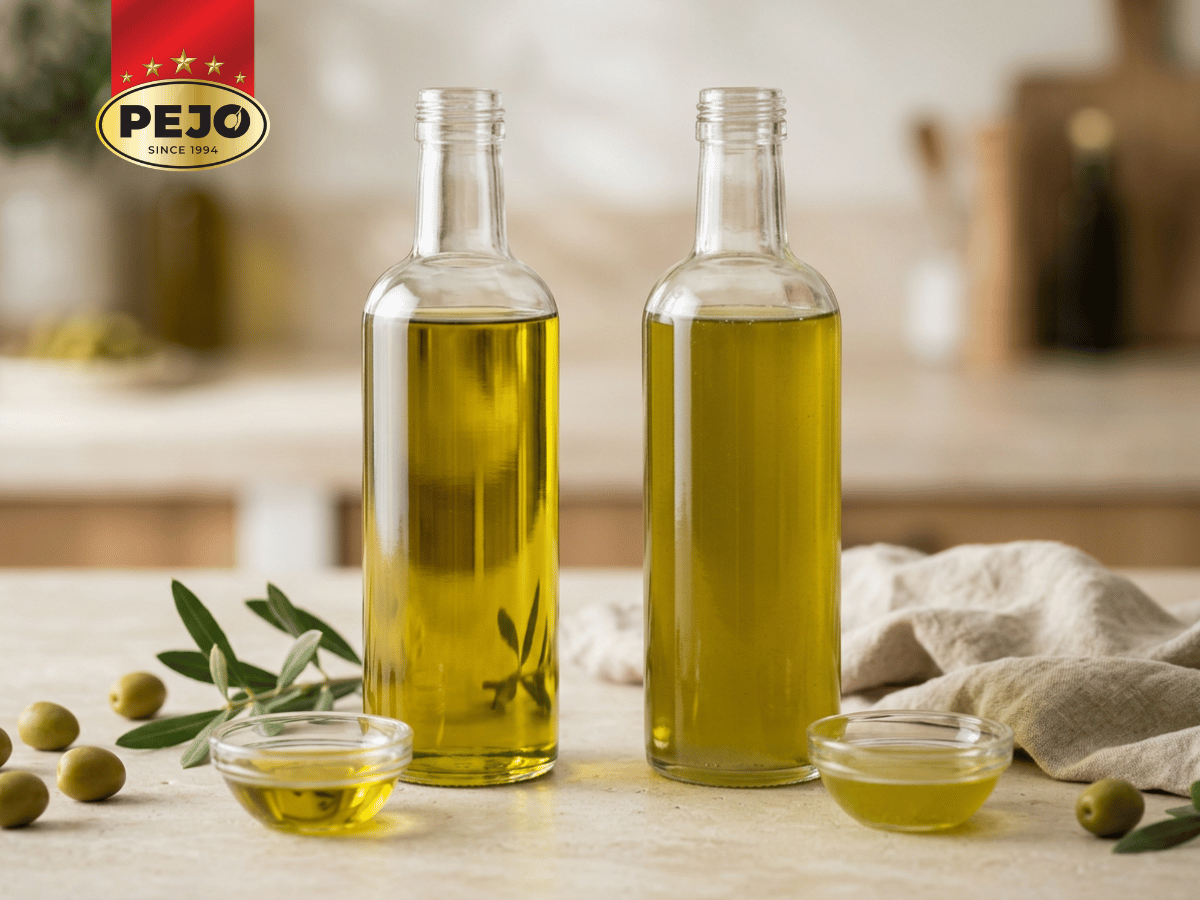
When choosing extra virgin olive oil, you may notice that some bottles contain clear, golden-green oil, while others have a naturally cloudy appearance with small amounts of sediment.
This difference is often related to filtration, a production step that can influence olive oil’s appearance, sensory characteristics, storage stability, and shelf life.
But when comparing filtered vs unfiltered olive oil, which is better?
Both filtered and unfiltered olive oils can qualify as extra virgin if they meet the required chemical and sensory standards. Filtered olive oil generally offers better storage stability, while unfiltered olive oil appeals to consumers who appreciate its cloudy appearance and freshly extracted character.
The right choice depends on your flavour preferences, consumption habits, storage conditions, and intended culinary applications.
In this guide, we explore the differences between filtered and unfiltered extra virgin olive oil and explain how to choose the right option for your kitchen.
What Is Olive Oil Filtration?
Olive oil filtration is a physical process used to remove suspended particles and residual moisture remaining after oil extraction.
During production, olives are crushed into a paste before the oil is separated from the fruit’s water and solid components.
Although modern extraction systems remove most of these materials, freshly extracted olive oil may still contain microscopic water droplets and small fragments of olive fruit.
These suspended materials can give the oil a naturally cloudy appearance.
Filtration helps remove these components, producing a clearer and generally more stable product.
How Is Olive Oil Filtered?
Depending on the manufacturer’s equipment and production requirements, filtration may involve cellulose filter sheets, filter presses, or other suitable food-grade filtration systems.
The process physically separates suspended particles and residual moisture from the oil.
Importantly, filtration does not mean that olive oil has undergone chemical refining.
Filtered extra virgin olive oil remains extra virgin when it meets the applicable quality and classification requirements.
At PEJO, filtration forms part of our wider approach to olive oil processing and quality management, where applicable to the selected product.
Learn more about our olive oil production and packaging process.
Filtered vs Unfiltered Olive Oil: Quick Comparison
The following table summarizes the main differences between the two types of olive oil.
| Characteristic | Filtered Olive Oil | Unfiltered Olive Oil |
|---|---|---|
| Appearance | Generally clear and transparent | Often cloudy or slightly hazy |
| Filtration | Suspended particles and moisture are reduced | No dedicated filtration step |
| Sediment | Generally minimal | May develop during storage |
| Residual moisture | Generally lower | May be higher |
| Flavour | Depends on cultivar, freshness, and processing | May have a distinctive freshly extracted character |
| Phenolic compounds | Naturally present in varying amounts | Naturally present in varying amounts |
| Storage stability | Generally better | Often more sensitive to deterioration |
| Shelf life | Typically longer under comparable conditions | May be shorter |
| Cooking applications | Suitable for everyday cooking | Suitable for cooking and finishing |
| Quality classification | Can qualify as extra virgin | Can qualify as extra virgin |
Filtration status alone does not determine whether an olive oil is superior in flavour, nutritional composition, or overall quality.
Why Is Unfiltered Olive Oil Cloudy?
Unfiltered olive oil often has a cloudy or slightly opaque appearance because it contains naturally suspended materials remaining after extraction.
These may include microscopic droplets of water, tiny fragments of olive pulp, and other residual particles from the olive fruit.
This appearance is sometimes described as veiled olive oil.
Freshly produced unfiltered olive oil may appear particularly cloudy immediately after extraction. Over time, some suspended material can gradually settle at the bottom of the bottle.
Does Cloudy Olive Oil Mean Better Quality?
Not necessarily.
Cloudiness can be associated with freshly extracted, unfiltered olive oil, but it does not establish the oil’s official quality grade.
A clear, filtered extra virgin olive oil can have excellent chemical and sensory characteristics, while a cloudy oil may fail to meet extra virgin classification requirements.
Other factors, including exposure to low temperatures, can also cause olive oil to become temporarily cloudy.
For this reason, appearance should not replace appropriate quality assessment.
The University of California, Davis guide to olive oil myths and facts explains the relationship between filtration, naturally suspended materials, freshness, and consumer preferences.
Differences in Taste and Texture
One of the main reasons consumers choose unfiltered olive oil is its association with traditional olive oil production and the sensory experience of freshly extracted oil.
However, the actual differences between filtered and unfiltered olive oil depend on several factors beyond filtration.
What Does Unfiltered Olive Oil Taste Like?
Fresh unfiltered extra virgin olive oil may exhibit pronounced olive fruitiness, herbal aromas, bitterness, or peppery characteristics.
Some consumers also describe its mouthfeel as slightly fuller.
These characteristics are influenced by the olive variety, fruit maturity, extraction conditions, residual particles, and the oil’s freshness.
Unfiltered olive oil does not automatically taste stronger or better than filtered olive oil.
What Does Filtered Olive Oil Taste Like?
Filtered extra virgin olive oil can retain the characteristic flavour, aroma, bitterness, and pungency associated with high-quality olive oil.
Depending on the variety and production conditions, filtered oils may range from delicate and fruity to intensely herbal and peppery.
An important advantage of filtration is its potential to help preserve desirable sensory characteristics during storage.
For consumers who prefer a clear appearance and consistent flavour over a longer consumption period, filtered extra virgin olive oil can be an excellent option.
Understanding Sediment in Unfiltered Olive Oil
If you purchase unfiltered olive oil, you may eventually notice a deposit at the bottom of the bottle.
This sediment can form as suspended olive particles and residual moisture gradually separate from the surrounding oil.
Its presence is not automatically an indication that the product has spoiled.
However, prolonged contact between the oil and residual sediment can contribute to undesirable chemical and sensory changes.
Why Does Residual Moisture Matter?
Although olive oil consists predominantly of fats, small quantities of residual water can remain following extraction.
Together with suspended organic materials, this moisture may support enzymatic and microbial activity under certain conditions.
These processes can contribute to the deterioration of oil quality and the development of unpleasant sensory characteristics.
A scientific study on filtration scheduling and quality changes in freshly produced virgin olive oil examined how removing these residual components can help stabilize olive oil during storage.
Is Sediment in Olive Oil Normal?
Small amounts of sediment can be normal in unfiltered olive oil.
Nevertheless, consumers should pay attention to the oil’s freshness, storage instructions, best-before information, and sensory characteristics.
An unpleasant musty, fermented, or rancid smell may indicate deterioration.
Sediment should not be interpreted as proof of authenticity, superior quality, or higher nutritional value.
Is Unfiltered Olive Oil Better for Your Health?
Unfiltered olive oil is sometimes marketed as a more natural or nutritionally superior product.
However, scientific evidence does not support the assumption that every unfiltered olive oil is healthier than every filtered olive oil.
Both filtered and unfiltered extra virgin olive oils contain monounsaturated fatty acids, including oleic acid, together with naturally occurring minor compounds such as phenolics and vitamin E.
Does Filtration Remove Antioxidants?
The effect of filtration on phenolic compounds varies according to the characteristics of the original oil, residual moisture, the filtration method, and subsequent storage conditions.
Certain filtration processes may reduce the concentrations of some compounds, while other processes may have relatively limited effects.
A scientific literature review on the effects of filtration on extra virgin olive oil quality examined these differences and highlighted the importance of filtration techniques and storage conditions when evaluating olive oil composition.
Even when an unfiltered oil initially contains higher concentrations of particular compounds, its composition may change more rapidly during storage.
Therefore, nutritional characteristics should be assessed based on the individual oil rather than filtration status alone.
Is Unfiltered Olive Oil More Natural?
Both filtered and unfiltered extra virgin olive oils are produced through permitted mechanical or physical processes.
Filtration is a physical separation step and does not involve the chemical refining associated with refined olive oil products.
A filtered extra virgin olive oil is not necessarily less natural simply because suspended particles and residual moisture have been removed.
For more information about olive oil classifications, read our guide to the differences between extra virgin, virgin, and pomace olive oil.
Filtered vs Unfiltered Olive Oil Shelf Life
Shelf life is one of the most important practical differences between filtered and unfiltered olive oil.
Although both types gradually change over time, unfiltered oils are generally more sensitive to deterioration associated with residual moisture and suspended organic material.
Filtration can help improve storage stability by reducing these factors.
Why Filtered Olive Oil Generally Lasts Longer
The California Olive Oil Council’s standards and requirements identify moisture and sediment management as important considerations for preserving olive oil quality.
Similarly, research examining the effect of filtration on virgin olive oil stability during storage indicates that filtration and moisture reduction can improve the storage performance of certain olive oils.
This is particularly relevant for products that will spend extended periods in distribution, retail storage, or household cupboards.
However, filtration cannot prevent all forms of deterioration.
Exposure to oxygen, light, and heat can negatively affect both filtered and unfiltered olive oils.
How Long Does Unfiltered Olive Oil Last?
There is no universal shelf life for unfiltered olive oil.
Its storage performance depends on the initial quality, moisture content, packaging, storage temperature, and exposure to oxygen and light.
As a practical recommendation, purchase unfiltered olive oil in quantities that you can consume relatively quickly and follow the manufacturer’s storage and best-before guidance.
Avoid purchasing large quantities simply to store them for extended periods.
How to Store Filtered and Unfiltered Olive Oil
To help preserve the quality of either type:
- Keep the bottle tightly closed after use.
- Store it in a cool, dark cupboard.
- Avoid exposure to direct sunlight.
- Keep it away from ovens, radiators, and stovetops.
- Choose a bottle size appropriate to your consumption habits.
- Follow the storage instructions and best-before information on the packaging.
At PEJO, controlled stainless-steel storage and nitrogen protection support our approach to preserving olive oil characteristics before packaging.
Can You Cook with Unfiltered Olive Oil?
Yes. Food-grade unfiltered extra virgin olive oil can be used for everyday cooking.
It is suitable for applications such as sautéing, roasting, sauces, marinades, and other Mediterranean preparations when temperatures are appropriately controlled.
However, residual moisture and suspended particles may make filtered oil a more practical choice for some frying applications.
Unfiltered olive oil is particularly appealing when used fresh in dishes where its distinctive sensory character can be appreciated.
Best Uses for Filtered and Unfiltered Olive Oil
| Culinary application | Suggested choice |
|---|---|
| Fresh salads | Either |
| Bread dipping | Either, particularly fresh unfiltered oil |
| Finishing pasta | Either |
| Grilled vegetables | Either |
| Everyday sautéing | Filtered or unfiltered |
| Roasting | Filtered or unfiltered |
| Baking | Filtered for consistent texture and flavour |
| Frequent frying | Filtered is generally more practical |
These are culinary recommendations rather than strict restrictions.
For more information about cooking temperatures and thermal stability, read our guide on cooking with extra virgin olive oil.
Which Olive Oil Should You Choose?
The choice between filtered and unfiltered extra virgin olive oil depends primarily on how you intend to use and store it.
Choose Filtered Olive Oil If:
You want a versatile product for everyday cooking, prefer a clear appearance, consume olive oil gradually, or prioritize longer storage stability.
Angels Extra Virgin Olive Oil offers an option for consumers looking for a versatile extra virgin olive oil suitable for Mediterranean cooking, salads, and everyday food preparation.
Choose Unfiltered Olive Oil If:
You enjoy the cloudy appearance associated with unfiltered olive oil, appreciate its freshly extracted character, and intend to consume the product relatively quickly.
Angels Unfiltered Extra Virgin Olive Oil is available in a 1-litre format, offering an alternative for consumers who prefer unfiltered extra virgin olive oil.
Both options have a place in Mediterranean cuisine. Choosing between them is a matter of freshness, product characteristics, personal preference, and consumption habits.
Frequently Asked Questions
Is unfiltered olive oil better than filtered olive oil?
Not necessarily. Unfiltered olive oil may appeal to consumers who prefer its appearance and sensory characteristics, while filtered olive oil generally offers better storage stability.
Is cloudy olive oil safe to consume?
Cloudiness associated with unfiltered olive oil or cool storage temperatures is not automatically a sign of spoilage. Check the product’s best-before information, storage conditions, and sensory characteristics.
Does unfiltered olive oil need to be refrigerated?
Refrigeration is not generally necessary for household olive oil storage. Follow the manufacturer’s instructions and keep the bottle tightly sealed in a cool, dark location.
Why do manufacturers filter olive oil?
Manufacturers filter olive oil to remove suspended particles and residual moisture, improve clarity, and support storage stability.
Can filtered olive oil still be extra virgin?
Yes. Filtration does not disqualify olive oil from being classified as extra virgin, provided it meets the applicable chemical and sensory requirements.
Is sediment at the bottom of an olive oil bottle normal?
Sediment can naturally develop in unfiltered olive oil as suspended materials settle. However, its presence does not guarantee freshness or superior quality.
Final Thoughts: Filtered or Unfiltered?
Understanding the differences between filtered and unfiltered olive oil can help you make a more informed purchasing decision.
Filtered extra virgin olive oil generally offers greater storage stability and a clear appearance, making it a practical choice for everyday use.
Unfiltered extra virgin olive oil offers a different sensory and visual experience that many consumers associate with traditional, freshly extracted olive oil.
Neither filtration status nor appearance alone determines the overall quality of an olive oil.
At PEJO, our product portfolio includes both filtered and unfiltered extra virgin olive oil options, allowing consumers to choose according to their culinary preferences and consumption habits.
Explore PEJO’s olive oil collection and discover the right olive oil for your kitchen.